
The plumbing industry is experiencing a transformation. While traditional pipe repairs and water heater installations remain essential, 2025 has brought a fundamental shift: smart plumbing technology is no longer a luxury feature for tech enthusiasts. It’s becoming mainstream infrastructure that saves money, prevents disasters, and protects your home automatically. In Los Angeles—a drought-prone state with aging water infrastructure—smart plumbing systems are moving from “nice to have” to essential home technology.
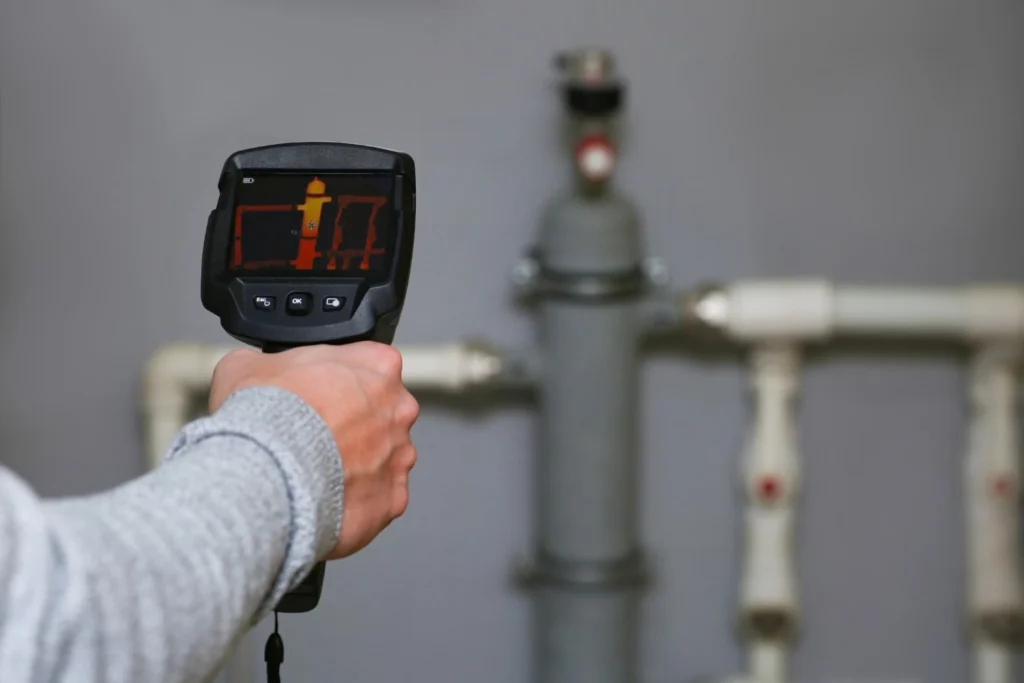
Consider this: the average American household wastes 10,000 gallons of water annually through leaks. In California, where every gallon matters during drought seasons, that represents wasted money, wasted resources, and unnecessary strain on LADWP’s aging infrastructure. Smart leak detection systems catch these hidden leaks within hours—sometimes minutes—of occurrence, preventing thousands in water damage and potentially millions in California’s collective water savings.
At Hi-Tech Plumbing Services Inc., we’ve installed smart plumbing systems in homes across Winnetka, Canoga Park, Sherman Oaks, and throughout Los Angeles County over the past two years. We’ve seen firsthand how these systems transform homeowners’ relationships with their water. No more wondering if a hidden leak is developing. No more surprised water bills. No more preventable water damage. Just reliable, automatic protection that works 24/7.
This guide explores the smart plumbing technologies available in 2025, explains how they work, shows the financial benefits and environmental impact, and positions you to make informed decisions about upgrading your home’s plumbing infrastructure for the future.
Smart Plumbing Technology Is No Longer Futuristic (It’s Here Now in 2025)
Five years ago, smart plumbing systems seemed like something from a science fiction movie. Today, they’re standard options in new construction throughout California, increasingly common in renovations, and increasingly affordable for retrofitting existing homes.
Why the Shift in 2025:
Manufacturing Scale: Smart device manufacturers have achieved production volumes that dramatically reduced costs. Smart leak detectors that cost $500-800 in 2020 now sell for $200-400. Smart water heaters have become competitively priced with traditional systems.
California Regulations: The 2025 Plumbing Code (discussed in our earlier blog) includes provisions encouraging water efficiency technologies and graywater systems. California energy rebate programs now offer $200-500 incentives for smart water heater upgrades, and utility companies provide rebates for leak detection systems.
Insurance Incentives: Major homeowner insurance companies now offer 5-15% premium discounts for homes with active leak detection systems. Over five years, insurance savings alone can offset equipment costs.
Water Scarcity Awareness: California’s drought conditions (ongoing since 2020 with intensification 2023-2025) have made water conservation a priority for environmentally conscious homeowners and a requirement for new construction.
Smartphone Integration: The ubiquity of smartphones means smart plumbing integration is now effortless. Homeowners can monitor water systems from anywhere—checking for leaks while on vacation, receiving alerts when unusual flow patterns develop, and controlling water heaters remotely.
Supply Chain Maturity: Five years of smart plumbing installation data has created feedback loops that improved reliability, durability, and real-world performance. Products that didn’t work well have been eliminated. Systems that proved effective have been refined.
The result: 2025 is the inflection point where smart plumbing moves from early adoption to mainstream adoption. If you’re considering plumbing upgrades, smart systems should be on your radar.
Smart Leak Detection: How Real-Time Monitoring Prevents Disaster
Imagine this scenario: You’re on holiday in Bora Bora. Your smartphone buzzes with a notification from your home’s leak detection system: “Unusual water flow detected in master bathroom, 2:47 AM. Flow rate 0.8 GPM (normal baseline 0.0 GPM). Potential leak.” You immediately alert your neighbor, who enters your home and discovers a toilet running continuously, wasting 2-3 gallons per hour. Without detection, that toilet would have run for two weeks—1,000+ gallons wasted, potential water damage to floors and walls, and an $800 water bill spike. With detection: problem solved within 30 minutes, minimal water waste, zero damage.
This isn’t hypothetical—it’s exactly the type of scenario smart leak detection prevents daily in Los Angeles homes.
How Smart Leak Detection Works
Detection Hardware: Small wireless sensors attach to water supply lines throughout your home—at the main supply line, under sinks, near water heaters, washing machines, and other high-risk locations.
Smart Hub: A central hub connects all sensors wirelessly (using WiFi or proprietary radio frequency) and runs algorithms analyzing water flow patterns.
Flow Analysis: The system learns your normal water usage patterns (morning showers use X gallons, washing machine cycles use Y gallons, etc.). When flow patterns deviate significantly, the system recognizes anomalies.
Real-Time Alerts: When unusual flow is detected, your smartphone receives an immediate notification with:
- Location of anomaly (which fixture/area)
- Flow rate (how much water is flowing)
- Baseline comparison (this is X% above normal)
- Recommended actions
Automatic Shut-Off (Advanced Systems): Some systems include automatic shut-off valves that completely stop water flow when a leak is detected, preventing any damage.
Location Pinpointing: Advanced systems use multiple sensors to triangulate leak location, helping plumbers identify exactly where problems exist without exploratory work.
Real-World Benefits in Los Angeles
Hidden Leak Detection: Many LA homes develop slow leaks in walls, under foundations, or in crawlspaces—places you’d never notice until substantial damage occurs. Smart detection catches these within hours.
Toilet Leaks: A toilet with a slow leak (common in older LA homes) might waste 200+ gallons daily—barely noticeable in water pressure but devastating in water bills. Detection identifies these immediately.
Washing Machine Connection Leaks: Rubber hoses connecting washing machines eventually crack or leak. Smart detection catches failure before significant damage.
Water Heater Leaks: Tank leaks start as tiny drips before becoming catastrophic failures. Early detection allows planned replacement rather than emergency service calls.
Vacation Protection: For homeowners who travel or own vacation properties, detection provides peace of mind. You’re instantly notified of problems regardless of location.
Cost-Benefit Analysis
Equipment Cost: $300-1,000 (depending on number of sensors and hub sophistication)
Installation Cost: $200-500 (if professionally installed; many systems are DIY-friendly)
Monthly Monitoring Fee: Most systems charge $10-15/month for cloud-based monitoring and alerts
Insurance Savings: 5-15% homeowner insurance discount = $150-500/year savings (varies by insurer and home value)
Water Savings: Average household with leak detection saves 10,000 gallons/year = $30-50/year at LA rates
Damage Prevention: Average water leak damage costs $15,000-25,000. Preventing even one leak over 10 years justifies system cost.
ROI Timeline: 2-4 years for complete payback through insurance savings and water conservation. Many systems also increase home resale value (IMPORTANT for LA’s competitive real estate market).
Water Conservation Through Smart Devices (California Rebate Programs Available)
Beyond leak detection, smart devices actively reduce water consumption—critical in California’s drought environment.
Smart Irrigation Controllers
How They Work: Sensors monitor weather conditions, soil moisture, and plant types. Controllers automatically adjust watering schedules based on real-time data—watering less on rainy days, adjusting for temperature changes, skipping watering during freezes.
Water Savings: 20-30% reduction in outdoor water use (most significant impact for homeowners with landscape irrigation)
California Rebates: LADWP and most Southern California water agencies offer $75-150 rebates for smart irrigation installation
ROI: Often achieved within first irrigation season
Best For: Homes with significant landscaping, drought-vulnerable areas, environmentally conscious owners
Smart Faucets and Fixtures
How They Work: Motion sensors or app controls activate water flow only when needed. Some include flow limiters that reduce water per use without sacrificing pressure perception.
Water Savings: 10-15% reduction in sink and bathroom water use
California Rebates: Some agencies offer $50-100 per fixture rebates
Installation: Can retrofit existing faucets or install with new construction
Smart Features:
- Temperature pre-set (warm water ready without running cold water)
- Usage tracking (see how much water each fixture uses)
- Scheduling (limit availability during peak hours)
Smart Shower Systems
How They Work: Devices measure shower flow and can limit it to California code compliance (1.8 GPM) while maintaining pressure perception through pulse or eco-shower modes.
Water Savings: 20-40% reduction in shower water use (significant for multi-person households)
Features:
- Temperature hold (prevents scalding variations)
- Flow pause (reduce flow without stopping water)
- Usage tracking (see monthly shower water consumption)
Cost: $200-600 for smart shower system (varies by sophistication)
Smart Whole-House Water Monitoring
How They Work: Central hub monitors total water usage, breaks it down by fixture/area, provides real-time feedback, and sends usage reports.
Consumer Benefit: Visibility into water consumption by fixture category (toilets 30%, showers 25%, outdoor irrigation 25%, appliances 20%, other 10%)
Behavioral Change: Simply seeing usage breakdown causes many households to reduce consumption by 10-15% through behavior modification
App Integration: Most systems integrate with smart home ecosystems (Google Home, Amazon Alexa, Apple HomeKit)
Cost: $300-700 including installation
Smart Water Heaters & Remote Temperature Control
Water heating represents 15-20% of household energy consumption in LA. Smart water heaters address this inefficiency.
Traditional Smart Tank Systems
How They Work: Electronic thermostats allow remote temperature adjustment via smartphone app, provide energy usage monitoring, enable scheduling (lower temps during off-peak hours, raise during peak use times).
Benefits:
- Adjust temperature remotely (no need to physically access unit)
- Lower temperature when away from home (energy savings)
- Raise temperature before arriving home (comfort)
- Monitor energy consumption in real-time
- Receive alerts for malfunction or high energy use
Energy Savings: 10-15% reduction in water heating costs through optimization and scheduling
Cost Difference vs. Traditional: $200-400 additional cost for smart vs. non-smart equivalent
ROI: 2-3 years through energy savings
Tankless Water Heaters with Smart Controls
How They Work: On-demand heating with smart controls that optimize efficiency. Remote app control allows temperature pre-setting, demand forecasting, and energy usage tracking.
Advantages vs. Tank Systems:
- Never run out of hot water (on-demand vs. tank capacity)
- 30-40% more energy efficient than traditional tanks
- Smaller physical footprint
- Longer lifespan (20+ years vs. 10-12 for tanks)
- Better suited for high-demand households
Disadvantages:
- Higher upfront cost ($2,500-4,000 vs. $1,200-1,800 for tank)
- Requires professional installation
- May need upgraded gas line or electrical service
- Not suitable for all situations (extremely hard water areas may require descaling)
Smart Integration: Modern tankless systems include app control, energy tracking, maintenance alerts, and integration with home automation
Cost Justification: For high-hot-water-demand households or those planning to stay in home long-term, tankless systems provide best ROI
California Energy Rebate Programs
LADWP and most Southern California utilities offer rebates for water heater upgrades:
Rebates Available:
- Energy-efficient tank systems: $200-400
- Tankless systems: $300-500
- Solar water heaters: Up to $1,000-1,500
Incentive Impact: Rebates often offset 25-40% of equipment cost, dramatically improving ROI timeline
Graywater Systems & Smart Irrigation (2025 Code-Approved)
The 2025 California Plumbing Code created new opportunities for graywater systems—recirculated shower and sink water used for irrigation. Smart systems automate this process.
How Smart Graywater Works
Collection: Water from showers, baths, and sinks is diverted (not toilet water—that remains “blackwater”)
Monitoring: Smart sensors ensure water quality is appropriate for intended use
Automated Diversion: System automatically directs water to landscape irrigation or storage tank based on demand
Flow Optimization: Smart logic prevents system overload, routes excess to standard sewage, maintains appropriate pressures
Water Savings Impact
Household Example: Average household produces 40-60 gallons daily of recoverable graywater. Using this for landscape irrigation eliminates need for fresh potable water for outdoor watering.
Annual Savings: 15,000-20,000 gallons per household annually = $50-75 in water costs, but more significantly = drought relief in California’s water-stressed environment
Code Compliance (2025): Single-family homes can install systems using up to 250 gallons/day of untreated graywater without permits
California Environmental Impact
Per the 2025 code changes, if just 30% of California homes installed graywater systems, it would conserve 1+ billion gallons of potable water annually—equivalent to serving 100,000+ households.
Cost-Benefit Analysis: How Smart Systems Pay for Themselves in LA
Let’s build a realistic scenario for a Winnetka or Canoga Park homeowner considering smart plumbing upgrades:
Scenario: Mid-Range Smart System Installation
Equipment:
- Smart leak detection (8 sensors + hub): $800
- Smart irrigation controller: $300
- Smart water heater (tankless upgrade): $3,000
- Total Equipment Cost: $4,100
Installation:
- Professional installation (leak detection + irrigation + water heater replacement): $1,500
- Total Installation Cost: $1,500
Total Initial Investment: $5,600
Annual Savings Breakdown
Insurance Discount: $200/year (5% reduction on average LA homeowner policy)
Water Conservation:
- Leak detection + smart fixtures: $40/year
- Smart irrigation: $50/year
- Graywater system (if installed): $75/year
- Subtotal: $165/year
Energy Savings (Tankless Water Heater):
- 30% efficiency improvement: $300/year
- Subtotal: $300/year
Avoided Leak Damage: Not calculable annually, but prevents average $5,000-15,000 damage over 10 years
Total Annual Savings: $665/year
ROI Timeline
- Year 1: $665 savings (payoff: 8.4 years initially)
- Year 2: $1,330 cumulative (payoff: 4.2 years)
- Year 3: $1,995 cumulative (payoff: 2.8 years)
- Year 4: $2,660 cumulative (payoff: 2.1 years)
- Year 5: $3,325 cumulative (payoff: 1.7 years—INCLUDING leak damage prevention)
With California Rebates Applied:
- Rebates reduce initial investment by $800-1,200
- Effective investment: $4,400-4,800
- Payoff period: 7-8 years becomes 6-7 years
Home Resale Value Impact:
- Smart home systems add 3-5% to home value in competitive LA market
- $500,000 home value increase: $15,000-25,000
- Smart plumbing system ROI: $5,600 investment for $15,000-25,000 value increase
Long-Term Sustainability (10-Year Analysis)
| Year | Cumulative Savings | Equipment Replacement | Net Benefit |
|---|---|---|---|
| 1-5 | $3,325 | $0 | $3,325 |
| 6-10 | $3,325 | -$600 (sensor battery replacement) | $6,050 |
| Total 10 Years | $6,650 | -$600 | $6,050 |
Plus: Prevented leak damage ($5,000-15,000 average), increased home value ($15,000-25,000), environmental impact (1,000+ gallons water conservation), and peace of mind (24/7 monitoring).
Installation Process & Hi-Tech Plumbing’s Smart System Expertise
Smart plumbing installation requires specific technical knowledge and experience. Here’s what professional installation includes:
Smart Leak Detection Installation
Assessment: Professional evaluation determines optimal sensor placement for maximum coverage
Hub Placement: Central hub installed in accessible location with WiFi coverage (usually near main water shut-off valve)
Sensor Installation: Wireless sensors attached to supply lines:
- Main incoming line
- Hot water line from water heater
- Branch lines to high-risk areas (bathrooms, kitchen, laundry)
- Individual fixture monitoring (if high-risk appliance)
WiFi Configuration: Hub configured to connect to home network, sensors paired with hub
App Setup: Homeowner’s smartphone configured to receive alerts, set baseline usage patterns
Training: Homeowner instructed on app features, alert interpretation, and emergency procedures
Cost: $200-400 for professional installation (many DIY-friendly systems can be self-installed, reducing cost to $0-100)
Smart Water Heater Installation
Assessment: Professional evaluation of current system, compatibility with smart features, gas/electrical requirements
System Selection: Determination of tankless vs. smart tank based on household needs, hard water issues, budget
Removal and Disposal: Professional removal of existing water heater (can be hazardous due to gas/electrical connections)
Installation: Professional installation with:
- Proper gas or electrical connections (MUST be licensed)
- Venting requirements met
- Relief valve and expansion tank installation
- Pressure and temperature testing
Smart Integration: Setup of WiFi connectivity, smartphone app configuration, energy monitoring calibration
Permitting: Professional coordination with LA County permitting if required
Cost: $500-1,200 for professional installation (required—not DIY-suitable)
Warranty: Professional installation typically includes 2-5 year parts warranty plus labor warranty
Smart Irrigation Controller Installation
System Assessment: Evaluation of existing irrigation system, controller compatibility, WiFi coverage
Controller Installation: Professional mounting in protected location with WiFi access
Sensor Installation (if applicable): Soil moisture sensors placed in representative garden areas
System Programming: Configuration of:
- Plant types (different water requirements)
- Zone settings (different areas of property)
- Weather data integration (local zip code for forecast-based adjustment)
- Watering schedules (optimized for California drought regulations)
App Setup: Homeowner access to controls, schedule modifications, usage tracking
Cost: $200-400 professional installation (many systems are DIY-installable for cost savings)
What Hi-Tech Plumbing Can Do to Smart-Enable Your System
Our role extends beyond traditional plumbing into smart system integration:
Professional Assessment and Design
We evaluate your entire plumbing system and recommend smart upgrades tailored to your specific situation:
- Leak detection sensor placement strategy
- Water heater upgrade analysis (tank vs. tankless)
- Smart fixture identification (which upgrades provide best ROI for your household)
- Graywater system feasibility
- Smart irrigation integration with existing landscape systems
Professional Installation Services
We provide full installation with:
- Licensed, bonded, professional technicians
- Warranty on all work (parts and labor)
- Integration with existing plumbing systems
- Compliance with LA County building codes
- 2025 Plumbing Code adherence
System Integration and Setup
We handle all technical configuration:
- WiFi connectivity optimization
- Smartphone app setup
- Baseline usage pattern establishment
- Alert configuration and customization
- Home automation system integration (Google Home, Alexa, Apple HomeKit)
- Ongoing support and troubleshooting
Water Testing and Optimization
Before smart system installation, professional water testing ensures:
- Hard water assessment (affects equipment selection)
- Water quality baseline (for graywater system compatibility)
- Lead level verification (for filtration system needs)
- Personalized recommendations for water treatment
Maintenance and Monitoring Services
Ongoing support ensures systems continue performing optimally:
- Annual sensor calibration
- Water heater efficiency verification
- Smart device battery replacement and updates
- Performance optimization adjustments
- Integration of new features as they become available
Future-Proofing Your Los Angeles Home Plumbing
Installing smart systems in 2025 isn’t just about immediate savings—it’s preparing for the future of home infrastructure.
Anticipated Developments (2026-2030)
AI-Driven Predictive Maintenance: Systems that predict failures before they occur (e.g., water heater expected to fail in 6 months, pipe corrosion predicted 1 year out)
Grid-Integrated Water Management: Smart homes coordinated with municipal water systems, adjusting usage during peak demand periods to help utilities manage resources
Advanced Graywater Processing: Smart systems treating graywater to potable standards for indoor reuse
Thermal Imaging Integration: Leak detection combined with thermal imaging identifying hidden pipe insulation failures
Blockchain-Based Water Credits: California exploring trading systems where households saving water earn credits
Carbon Offset Integration: Smart systems calculating water/energy savings and integrating with carbon offset programs
Regulatory Trajectory
California’s Direction: Future plumbing codes will increasingly mandate water-efficient fixtures, require graywater system readiness, and incentivize smart monitoring
LA’s Water Future: LADWP has publicly stated goals of 25% water consumption reduction by 2030. Smart systems will be essential to achieving this
Insurance Evolution: More insurers will mandate leak detection for coverage; premiums may increase for homes without systems
Home Resale Requirements: Future home buyers may expect smart plumbing systems as standard, similar to how they now expect WiFi and electrical capacity
Positioning for 2030: Homes with smart plumbing systems installed in 2025 will be optimally positioned for future regulations and market expectations
Make the Smart Choice Today
The question is no longer “Should I install smart plumbing?” but rather “When will I install smart plumbing?”—because the technology has matured, the financial benefits are proven, and the environmental necessity is clear.
For homes across Los Angeles—from Winnetka to Canoga Park, Sherman Oaks to Burbank, Santa Monica to Glendale—smart plumbing systems represent the evolution of home infrastructure. They transform your relationship with water, reduce waste, prevent disasters, and prepare your home for the future.
Hi-Tech Plumbing Services Inc. specializes in smart plumbing system design, installation, and ongoing support throughout Los Angeles County. We’ve installed systems in hundreds of homes, and we understand the specific needs of LA properties—from hard water issues in the San Fernando Valley to aging infrastructure in older neighborhoods to drought-related water conservation needs throughout the county.
Ready to smart-enable your plumbing? We offer:
- Free smart plumbing system consultations (evaluate your current system)
- Customized upgrade recommendations (prioritized by ROI and impact)
- Professional installation with warranty (licensed, bonded, insured)
- Ongoing monitoring and support (ensure optimal performance)
Call Hi-Tech Plumbing Services Inc. at (818) 941-6741 to schedule your smart plumbing consultation. Or visit our contact page to book online.
The future of plumbing is smart, efficient, and protective. It’s available today. And it’s far more affordable than most homeowners expect. Don’t wait for the next water crisis or emergency water damage to upgrade. Invest in smart plumbing now—your home, your wallet, and California’s water future will thank you.