
Three weeks ago, something important happened that most Los Angeles homeowners missed. On December 10, 2025, the Environmental Protection Agency issued a consent order to Los Angeles Department of Water and Power (LADWP), requiring inspection of nearly 100 drinking water reservoirs over the next six years. The order came after federal inspectors identified maintenance violations during a July 2024 inspection of 18 water storage tanks—including unprotected openings, inconsistent cleaning schedules, and documentation gaps.
If you’ve seen this news on local channels or social media, you might be wondering: Is my tap water safe? The short answer is yes. LADWP has confirmed that current drinking water meets all federal and state safety standards. However, this EPA order highlights a broader conversation about water quality that affects Los Angeles County residents daily—hard water, mineral buildup, lead contamination, and the importance of understanding what’s actually coming from your taps.
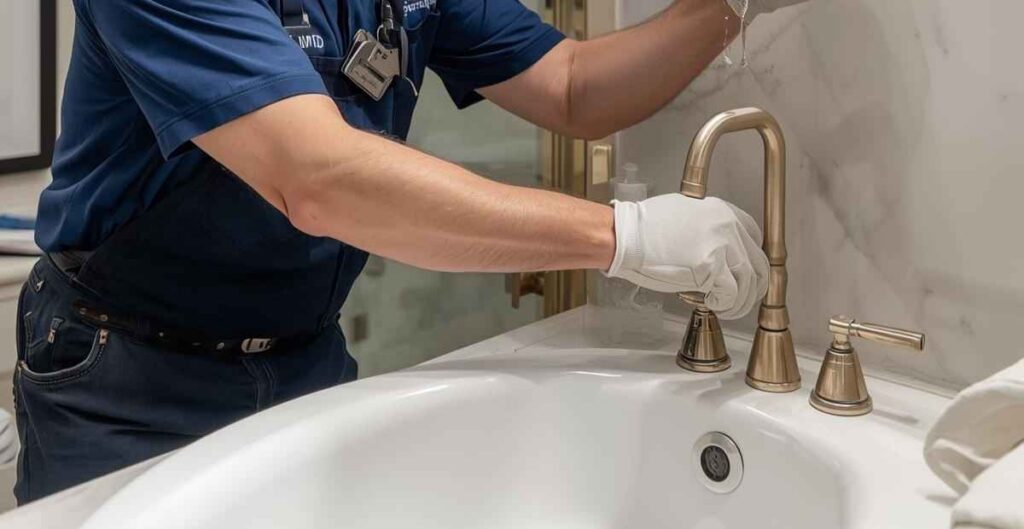
At Hi-Tech Plumbing Services Inc., we’ve been fielding calls from concerned homeowners across Winnetka, Canoga Park, Sherman Oaks, and throughout Los Angeles County asking the same questions. This guide explains what the EPA order actually means, addresses common water quality concerns specific to LA, and shows you how to protect your family’s water supply.
What the EPA Just Ordered LADWP to Do (December 3, 2025 Consent Order)
Let’s start with the facts. During an inspection in July 2024, EPA inspectors discovered that 18 LADWP water storage facilities had maintenance issues that could potentially compromise drinking water quality. The specific violations included:
Unprotected Openings: Some reservoir access points lacked proper sealing, potentially allowing contaminants to enter during maintenance or inspections.
Inconsistent Cleaning Schedules: Not all reservoirs were cleaned on the recommended schedule, allowing sediment and biofilm accumulation.
Documentation Gaps: Records didn’t clearly show when inspections and cleaning occurred, violating federal tracking requirements.
Missing Certifications: Some maintenance staff hadn’t completed required water safety certifications.
In response, LADWP signed a consent order on December 3, 2025, committing to:
- Inspect all 100+ water storage reservoirs and tanks by December 31, 2031
- Clean and rehabilitate any contaminated or deteriorated facilities
- Implement enhanced monitoring and documentation systems
- Conduct quarterly inspections rather than annual (increased oversight)
- Hire certified water safety professionals to oversee all work
This isn’t unique to LA—water utilities nationwide face similar regulatory pressure. However, the seven-year timeline reflects the scope of work required across LADWP’s massive system serving 3.8 million people.
Does This Mean Your Tap Water Is Unsafe? (The Honest Answer)
No. LADWP has consistently stated, and the EPA has confirmed, that current drinking water meets all federal and state safety standards. No contamination was found during the inspection. The violations were maintenance and documentation issues, not active water contamination.
However, here’s the important nuance: Current safety doesn’t guarantee future safety without action. Aging infrastructure, deferred maintenance, and increasing water demand create long-term risks. The EPA order, while regulatory, is actually a good thing—it forces proactive maintenance before failures occur.
Think of it like your car’s oil change schedule. Your car runs fine without an oil change, but regular maintenance prevents future engine failure. The EPA order is essentially a mandatory maintenance schedule for LA’s water infrastructure.
The Real Story: LADWP’s aging infrastructure isn’t unique to Los Angeles. Most major US water systems built in the 1950s-1980s are now experiencing the same maintenance challenges. LADWP is actually ahead of many cities in addressing the problem proactively.
Common Water Quality Issues in Los Angeles Homes
While LADWP’s infrastructure is generally sound, water quality problems that affect individual homes are more common. Understanding these issues helps you protect your family:
Hard Water (Mineral Buildup): This is THE issue in Los Angeles County. Hard water contains elevated levels of calcium and magnesium—beneficial minerals in small amounts, but problematic in large quantities. Symptoms include:
- White crusty deposits on faucet aerators
- Reduced water pressure over time
- Higher soap usage (hard water prevents lathering)
- Appliance inefficiency (water heaters, dishwashers work harder)
- Skin dryness or dull hair after showering
Sediment and Particles: Older pipes shed interior material, causing visible particles in hot water. This is usually harmless but aesthetically unpleasant.
Chlorine Taste and Odor: LADWP adds chlorine to maintain water safety during distribution. While safe in treated amounts, some people notice taste or smell—especially noticeable in hot water.
Low Water Pressure: Often caused by mineral accumulation or sediment in supply lines. Becomes noticeable after 20+ years in older homes.
Discoloration: Rusty-colored or brownish water indicates corroded pipes leaching iron into supply lines. More common in homes built before 1980.
Hard Water Problems Specific to the San Fernando Valley
If you live in the San Fernando Valley—Winnetka, Canoga Park, Van Nuys, Studio City, Toluca Lake, Sherman Oaks—you experience some of the hardest water in Los Angeles County. Water hardness testing shows:
San Fernando Valley Average: 250-400 ppm (parts per million) Optimal Hardness: <60 ppm EPA Recommended Limit: <150 ppm
The Valley’s high hardness is due to underground aquifer composition—mineral-rich groundwater that’s treated but retains hardness minerals. This creates specific problems:
Scale Buildup in Pipes
Over 20-30 years, mineral scale accumulates inside copper and galvanized steel pipes, reducing internal diameter. A 1-inch pipe can be reduced to ¾-inch effective diameter by scale alone. This reduces water pressure and flow dramatically.
Water Heater Efficiency Loss
Sediment accumulation in water heater tanks reduces heat transfer efficiency, causing:
- Longer heating times
- Higher energy bills (15-25% more expensive to operate)
- Reduced hot water delivery during peak demand
- Shorter water heater lifespan (6-8 years instead of 10-12)
Fixture Degradation
Hard water clogs aerators, reduces cartridge lifespan in faucets, and damages fixture components. Replacing aerators and cartridges frequently becomes routine maintenance.
Plumbing System Stress
Every component—shut-off valves, check valves, mixing valves—accumulates scale. During emergencies (frozen pipes, high-demand situations), these weak points fail. That’s why holiday plumbing emergencies spike in the Valley—the hard water combined with aging pipes reaches breaking point under stress.
Lead Contamination Risks in Older Los Angeles Homes
While current LADWP water meets lead standards, water from treatment plants can still pick up lead in home plumbing systems. This is a serious concern for older properties across Los Angeles:
Where Lead Comes From
Lead Solder: Homes built before 1986 often have copper pipes joined with lead-containing solder (typically 50% lead content). Water flowing through these joints can leach lead, especially in acidic water (soft water is more acidic).
Brass Fittings: Faucets, valves, and brass components contain brass (an alloy of copper and zinc with trace lead). Even “lead-free” brass under federal definition can contain up to 0.25% lead.
Galvanized Steel Pipes: Older homes (pre-1950s) sometimes have galvanized steel with lead-containing protective coatings.
California’s Stricter Standard
California’s lead standard is <0.25% lead content in all potable water contact materials—half the federal standard of 0.5%. This means:
- California homes can’t have any component exceeding 0.25% lead
- New installations must use certified lead-free materials
- Water testing must verify lead levels below California’s limit
- Homeowners of pre-1986 homes should test water regularly
Who’s Most Vulnerable
Children (ages 0-6): Developing brain tissue is especially vulnerable. Even small amounts of lead can affect learning, behavior, and development.
Pregnant Women: Lead crosses the placental barrier and affects fetal development.
Elderly People: Accumulated lead exposure over lifetime can affect bone health and cognitive function.
People with Anemia or Calcium Deficiency: These conditions increase lead absorption.
Lead Exposure Prevention
- Test Your Water: Professional water testing identifies lead levels in your home
- Flush First-Use Water: If water sat in pipes overnight, run cold water for 30 seconds before drinking (allows lead-saturated water to flush out)
- Use Cold Water for Drinking/Cooking: Hot water leaches more lead from pipes
- Consider Filtering: Point-of-use filters (faucet-mounted, under-sink) can reduce lead by 50-80% with proper maintenance
- Plan Repiping if Necessary: For pre-1986 homes with lead solder, eventual repiping with certified lead-free materials is recommended
Protect Your Family: Water Filtration & Testing Solutions
Beyond basic tap water safety, many LA homeowners choose to improve water quality for health, taste, and appliance protection. Here are the main options:
Water Testing
Professional Water Quality Testing ($100-200):
- Tests for lead, bacteria, minerals, pH, chlorine, and contaminants
- Identifies specific problems affecting your home
- Provides baseline for filter selection
- Insurance-accepted documentation for lead concerns
Recommended if: Your home was built before 1986, water tastes unusual, or you notice sediment/discoloration.
Whole-House Filtration Systems
Benefits:
- Treats water for entire home (not just one faucet)
- Reduces sediment, chlorine, some minerals
- Extends appliance life (water heaters, dishwashers, washing machines)
- Better for skin and hair
- Lower maintenance than point-of-use filters
Types:
Sediment Filter: Removes particles (first stage of most systems). Cost: $200-400. Lifespan: 6-12 months.
Carbon Filter: Removes chlorine taste/odor, some contaminants. Cost: $300-600. Lifespan: 12 months.
Water Softener: Removes calcium/magnesium (hard water minerals). Cost: $1,500-3,000. Saves $15-25/month on soap, shampoo, detergent. ROI: 5-8 years.
Multi-Stage Systems: Combination of sediment, carbon, and mineral reduction. Cost: $2,000-4,000. Most comprehensive for San Fernando Valley hard water.
Point-of-Use Filters
Under-Sink Filter:
- Cost: $300-600
- Effectiveness: Reduces sediment, chlorine, some contaminants
- Maintenance: Filter replacement every 6-12 months
- Best for: Kitchen drinking/cooking water
Faucet-Mounted Filter:
- Cost: $30-100
- Effectiveness: Basic sediment and chlorine reduction
- Maintenance: Cartridge replacement every 2-3 months
- Best for: Quick, budget-friendly solution
Refrigerator Filter:
- Cost: Built-in to many refrigerators
- Effectiveness: Moderate (varies by filter type)
- Maintenance: Cartridge replacement every 6 months
- Best for: Convenience, already-equipped homes
California Water Conservation & Rebate Programs
Here’s something many LA homeowners don’t realize: upgrading to water-efficient fixtures or installing water conservation systems can qualify you for utility rebates from LADWP and other Southern California water agencies.
Available Rebates
Smart Irrigation Controllers: $75-150 rebate
- Automatically adjust watering based on weather
- Reduces outdoor water waste by 20-30%
- Especially valuable in drought-prone LA
Water-Efficient Fixtures: $50-200 rebate per fixture
- Showerheads (1.8 gpm)
- Faucet aerators (1.5 gpm)
- Efficient toilets (1.28 gal/flush)
Water Heater Upgrades: $200-500 rebate
- Tankless systems (on-demand, no waste)
- High-efficiency tank systems
- Solar water heaters (up to $1,000)
Whole-House Water Recycling: Varies
- Graywater systems
- Rainwater harvesting
Check LADWP’s website or contact your local water agency for current rebate availability in your area.
What Hi-Tech Plumbing Can Do to Safeguard Your Water Supply
Our role extends beyond emergency repairs. We help LA homeowners maintain and improve their water systems:
Professional Water Testing
We offer professional water quality assessment that identifies:
- Lead levels (with CA-compliant testing)
- Bacterial contamination
- Mineral content (hardness)
- pH balance
- Chlorine levels
- Sediment or particles
Results include specific recommendations for your home.
Water Softener Installation
For San Fernando Valley homes struggling with hard water, water softener installation provides immediate relief:
- Eliminates scale buildup
- Extends appliance life
- Improves skin and hair
- Reduces monthly chemical/soap costs
- Qualifies for LADWP rebates
Water Filtration Systems
We specialize in professional water filtration system installation tailored to your specific water quality issues:
- Sediment removal
- Chlorine/taste reduction
- Lead reduction (certified filters)
- Mineral balancing
- Multi-stage comprehensive systems
Pipe Inspection & Leak Detection
Aging pipes cause water quality problems. Our leak detection services use video camera inspection to identify:
- Corroded sections leaching minerals or metals
- Cracks allowing groundwater infiltration
- Sediment accumulation points
- Structural failures affecting water safety
Early detection prevents contamination and emergency failures.
Professional Repiping
For homes with lead solder or extensively corroded pipes, complete drain line and water line repiping with certified lead-free materials ensures water safety for decades:
- Uses PEX or copper with lead-free solder
- Improves water pressure and flow
- Eliminates contamination risks
- Often qualifies for rebates
Backflow Prevention Installation
Protecting your home’s water supply also means preventing contamination from flowing backward:
- Gas line installation and repair with proper backflow prevention
- Certified installation meeting LA County code
- Prevents cross-contamination with non-potable water
The Bottom Line: LADWP Is Safe, But Individual Homes Vary
The EPA consent order on LADWP facilities might sound alarming, but it’s actually government working as intended—identifying problems and forcing proactive solutions. LADWP’s current water is safe for all standard uses.
However, your individual home’s water quality depends on:
- Age of your pipes (lead risk for pre-1986 homes)
- Water hardness issues (especially in San Fernando Valley)
- Maintenance of your plumbing system
- Whether you’ve had professional water testing
- Installation of appropriate filters or softeners
The smart approach combines three things:
1. Understand Your Water: Get professional testing to know exactly what’s in your water 2. Maintain Your System: Regular leak detection and pipe inspection prevent problems 3. Treat If Necessary: Install appropriate filtration or softening for your specific issues
Take Action Today
If you live in Winnetka, Canoga Park, Sherman Oaks, Burbank, Glendale, or anywhere across Los Angeles County, you deserve to know your family’s water is safe. Don’t just assume it’s fine—get it tested.
Hi-Tech Plumbing offers free consultations to discuss your water quality concerns. We can arrange professional testing, explain your results, and recommend solutions tailored to your home’s specific needs. Many solutions qualify for LADWP rebates, so the actual cost to you may be lower than expected.
Call Hi-Tech Plumbing Services Inc. at (818) 941-6741 to schedule your water quality assessment. Or visit our contact page to book a consultation online.
The EPA order ensures LADWP maintains safe infrastructure for the future. But today, protecting your family’s water starts at your home—with professional testing, proper maintenance, and appropriate treatment. Let us help you ensure your water is as clean and safe as possible for everyone under your roof.