
Natural gas powers millions of homes across the United States, providing an efficient source of energy for cooking, heating, and hot water. While it’s generally safe when delivered through a properly maintained gas line system, even a small leak can become a serious safety hazard if left undetected.
Gas leaks are responsible for thousands of emergency calls every year. Besides increasing the risk of fire and explosions, escaping natural gas can reduce oxygen levels indoors, leading to symptoms such as dizziness, headaches, fatigue, and nausea. Fortunately, gas leaks often provide warning signs before they become dangerous—if you know what to look for.
Important: If you smell natural gas or believe there’s an active leak, leave the building immediately, avoid using electrical switches or open flames, and contact your gas utility company from a safe location. Once authorities determine it’s safe to enter the property, a licensed professional can inspect and repair the gas line.
What Causes a Gas Leak?
Natural gas travels through an extensive network of underground utility lines and interior gas pipes before reaching appliances like furnaces, water heaters, fireplaces, clothes dryers, and gas stoves. Over time, these components can wear out or become damaged, increasing the risk of leaks.
Some of the most common causes include:
- Aging or corroded gas pipes
- Loose pipe fittings and threaded connections
- Poor-quality installation or previous repairs
- Earthquakes and ground movement
- Construction or landscaping damage
- Worn flexible appliance connectors
- High-pressure gas line failures
- Faulty gas valves
- Damaged gas regulators
- Improper appliance installation
California homeowners should be especially aware of seismic activity, as even minor ground movement can stress underground gas lines and older piping systems. After an earthquake, it’s always wise to inspect your home for signs of gas leaks before restoring normal activities.
If your property has aging gas piping or you’ve noticed recurring gas odors, scheduling a professional inspection can help identify potential issues before they become emergencies. Hi-Tech Plumbing Services Inc provides professional Gas Line Installation & Repair services to ensure your home’s gas system remains safe, code-compliant, and reliable.
Why Gas Leaks Are So Dangerous
Many homeowners assume they’ll immediately notice a gas leak because of its strong smell. While utility companies add a sulfur-like odor called mercaptan to natural gas to help people detect leaks, odor isn’t always a reliable warning. In some situations, the smell may fade or become less noticeable, especially with underground leaks or prolonged exposure.
A gas leak can create several hazards at once.
Fire and Explosion Risk
Natural gas is highly flammable. When enough gas accumulates inside a confined space, even a tiny spark from an electrical switch, appliance, or static electricity can ignite it.
That’s why experts recommend never turning lights on or off if you suspect a gas leak.
Health Effects
Although natural gas itself isn’t considered poisonous, it displaces oxygen in enclosed spaces. Reduced oxygen levels may cause:
- Headaches
- Dizziness
- Fatigue
- Nausea
- Shortness of breath
- Difficulty concentrating
- Loss of consciousness in severe cases
These symptoms often improve once the affected person leaves the contaminated area.
Property Damage
Small leaks rarely stay small forever.
Corrosion, vibration, temperature changes, and everyday wear can gradually enlarge damaged sections of gas piping. Detecting problems early often prevents extensive repairs and expensive emergency situations.
Gas Leak vs. Carbon Monoxide: What’s the Difference?
Many homeowners confuse natural gas leaks with carbon monoxide exposure, but they’re two very different hazards.
| Natural Gas Leak | Carbon Monoxide |
|---|---|
| Highly flammable | Highly poisonous |
| Smells like rotten eggs because of added odorant | Completely odorless |
| Can explode if ignited | Cannot explode under normal household conditions |
| Escapes from damaged gas lines | Produced by improperly burning fuel |
| Usually detected through smell or gas detectors | Requires carbon monoxide detectors |
Both hazards deserve immediate attention, and every home with gas appliances should have working carbon monoxide alarms installed according to local safety recommendations.
10 Warning Signs of a Gas Leak
Understanding these warning signs can help you act quickly before a small leak turns into a dangerous emergency.
1. A Strong Rotten Egg Smell
The most recognized sign of a natural gas leak is the unmistakable smell of rotten eggs or sulfur. Natural gas is naturally odorless. Utility companies intentionally add a harmless chemical called mercaptan to make leaks easier to detect. Some homeowners mistakenly assume the odor is coming from a drain or sewer line. If you’re uncertain about the source, it’s always safer to have your gas system evaluated by a licensed professional.
If you notice this odor:
- Near your stove
- Around the water heater
- Inside the garage
- By the gas meter
- Around your furnace
- Near fireplaces
- Around outdoor gas piping
don’t ignore it.
Even if the smell seems faint or disappears after a few minutes, it may indicate an intermittent leak that requires professional inspection.
2. Hissing or Whistling Sounds Near Gas Lines
Gas escaping under pressure often creates a noticeable hissing or whistling sound. The larger the leak, the louder the noise tends to be. Never attempt to tighten fittings or repair the pipe yourself. Instead, evacuate the property and contact your gas utility provider immediately.
Listen carefully around:
- Gas meters
- Outdoor gas pipes
- Water heaters
- Furnaces
- Gas fireplaces
- Clothes dryers
- Gas shutoff valves
A loud hissing sound combined with a gas odor should always be treated as an emergency.
3. Dead Grass, Plants, or Landscaping
Not every gas leak occurs inside your home. Underground gas lines can develop leaks that affect your landscaping long before you notice any indoor symptoms. Natural gas escaping beneath the soil prevents plant roots from receiving adequate oxygen.
If you suspect an underground leak, Hi-Tech Plumbing Services Inc offers professional Leak Detection & Repair services using advanced diagnostic equipment to locate hidden leaks accurately while minimizing disruption to your landscaping.
Watch for:
- Dead patches of grass
- Yellowing vegetation
- Shrubs dying without explanation
- Plants that suddenly wilt despite proper watering
- Trees showing unusual stress
If only one section of your yard suddenly dies while surrounding plants remain healthy, an underground gas leak could be the cause.
Never dig near suspected gas lines. Professional leak detection equipment can pinpoint underground leaks without damaging your property.
4. Bubbling Water or Standing Puddles
Gas leaks can develop gradually over time, and early detection is one of the most effective ways to protect your home, your family, and your property. In the next section, we’ll cover additional warning signs that many homeowners miss, including unexpectedly high gas bills, physical symptoms of gas exposure, pilot light issues, unusual appliance flames, and how modern electronic gas detectors can identify leaks before they’re noticeable.
When underground gas escapes into saturated soil, it often travels upward through puddles, ponds, drainage areas, or other standing water.
You may notice:
- Continuous bubbling
- Water rippling without wind
- Small streams of bubbles near gas pipelines
- Disturbed water surfaces
5. An Unexpected Increase in Your Gas Bill
Have you noticed your monthly gas bill climbing even though your household’s energy usage hasn’t changed? While higher gas bills can result from inefficient appliances or increased energy consumption, they can also indicate a leak somewhere in your home’s gas piping system. Scheduling a professional inspection can help identify the cause and prevent unnecessary energy waste.
Before assuming higher seasonal rates are to blame, compare your recent bills with the same period from the previous year.
You should investigate if:
- Your gas usage has increased without adding new appliances.
- Your heating habits haven’t changed.
- Your utility bill is significantly higher than normal.
- You haven’t experienced unusually cold weather.
6. Physical Symptoms of Gas Exposure
One of the earliest warning signs of a gas leak may not be something you see or hear—it may be how you feel. When natural gas accumulates inside an enclosed space, it can reduce oxygen levels in the air, making it difficult to breathe comfortably.
Common symptoms include:
- Headaches
- Dizziness
- Lightheadedness
- Fatigue
- Nausea
- Difficulty breathing
- Eye irritation
- Reduced concentration
These symptoms often become worse while you’re inside the home and improve after leaving the building.
When to Seek Medical Attention
If anyone experiences severe dizziness, confusion, loss of consciousness, or difficulty breathing, leave the property immediately and call emergency services. Your health should always come before investigating the source of the leak.
7. Pilot Lights That Frequently Go Out
Many gas-powered appliances use a pilot light to ignite the burner. If the pilot light repeatedly goes out without an obvious reason, it could indicate. Never attempt to repeatedly relight a pilot light if you smell gas nearby. Turn off the appliance if it’s safe to do so, leave the area, and contact your gas utility company or a licensed professional.
- An interruption in gas supply
- A faulty gas valve
- Excess moisture
- Ventilation issues
- A developing gas line problem
Common appliances affected include:
- Water heaters
- Older furnaces
- Gas fireplaces
- Older kitchen ranges
8. Yellow or Orange Flames Instead of Blue
A healthy natural gas flame typically burns bright blue. If your gas appliances suddenly begin producing yellow, orange, or flickering flames, it may indicate improper combustion. Although not every yellow flame means there’s a gas leak, it’s a warning sign that shouldn’t be ignored.
Potential causes include:
- Dirty burners
- Insufficient oxygen
- Blocked vents
- Appliance malfunction
- Gas pressure issues
Have the appliance inspected by a qualified technician before continuing regular use.
9. Visible Damage to Gas Pipes or Connections
Take a look at any exposed gas piping around your home. If you notice visible deterioration, don’t wait until you smell gas. Preventive repairs are far safer—and usually much less expensive—than dealing with a gas emergency.
Whether you need a routine inspection or suspect a damaged gas pipe, Hi-Tech Plumbing Services Inc provides professional Gas Line Installation & Repair services to help keep your home’s gas system safe and up to current code requirements.
Signs that require immediate attention include:
- Rust or corrosion
- Loose fittings
- Bent piping
- Cracks
- Physical impact damage
- Missing pipe supports
- Worn flexible connectors
10. Your Gas Leak Detector Goes Off
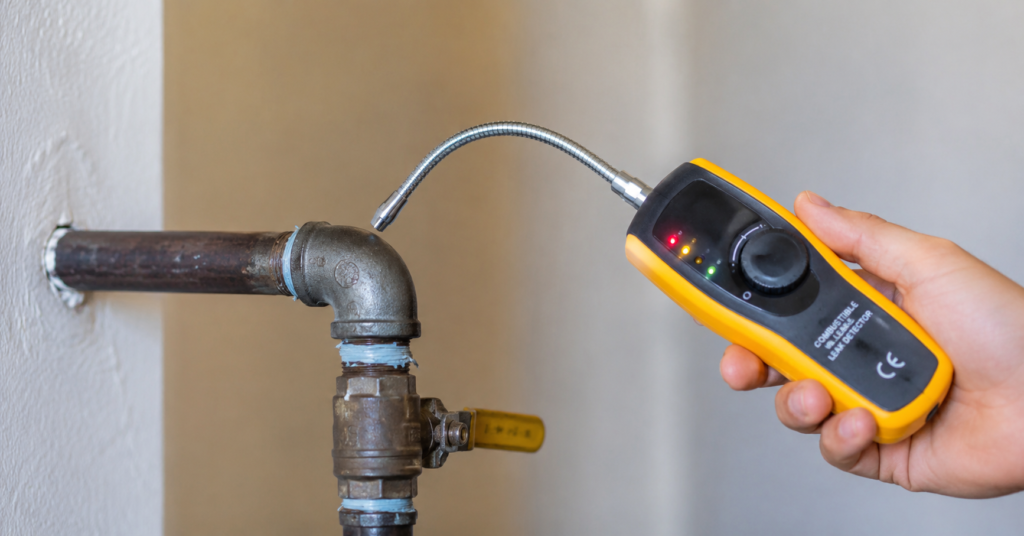
Modern gas leak detectors are one of the most reliable ways to identify a leak before it becomes dangerous. Unlike relying solely on smell, electronic combustible gas detectors continuously monitor the air and alert you when gas concentrations increase.
Some advanced smart detectors can even:
- Send alerts to your smartphone
- Integrate with home security systems
- Monitor multiple combustible gases
- Provide early warnings before odors become noticeable
If your detector alarms:
- Stay calm.
- Evacuate everyone from the building.
- Avoid operating electrical switches.
- Do not use matches, candles, or lighters.
- Contact your gas utility company from a safe location.
Indoor vs. Outdoor Gas Leak Symptoms
Gas leaks don’t always occur inside the home. Understanding the difference between indoor and outdoor warning signs can help you identify a problem sooner.
| Indoor Gas Leak | Outdoor Gas Leak |
|---|---|
| Rotten egg smell | Dead grass or plants |
| Hissing near appliances | Bubbling water |
| Physical symptoms | Blowing dirt or dust |
| Pilot light problems | Hissing near gas meter |
| Yellow appliance flames | Damaged gas line after construction |
| Gas detector alarm | Persistent sulfur smell outside |
Recognizing these differences allows homeowners to respond more quickly and reduce the risk of serious damage.
What to Do If You Suspect a Gas Leak
If you believe there’s a gas leak in or around your home, acting quickly can protect your family and prevent a dangerous situation from escalating.
1. Leave the Building Immediately
Don’t stop to gather personal belongings. Help children, elderly family members, and pets leave the property as quickly as possible.
2. Avoid Creating Sparks
Never:
- Turn lights on or off
- Plug in chargers
- Operate garage door openers
- Use elevators
- Strike matches
- Light candles
- Smoke indoors
Even a tiny spark can ignite accumulated natural gas.
3. Don’t Use Phones Inside the Home
Wait until you’ve moved a safe distance away before calling anyone. Make emergency calls from outside the affected area.
4. Shut Off the Gas Only If It’s Safe
If you know where your home’s gas shutoff valve is and can access it without entering a hazardous area, shutting off the gas may help reduce the risk. However, never delay evacuation to locate the valve.
5. Contact Your Gas Utility Company
Report the suspected leak immediately. They’ll determine whether emergency crews need to respond and will inspect the gas system before service is restored.
6. Call a Licensed Plumbing Professional
Once the utility company confirms it’s safe to enter the property, contact a qualified gas line repair specialist.
Hi-Tech Plumbing Services Inc offers professional Leak Detection & Repair services along with expert Emergency Plumbing Services throughout Los Angeles. Our experienced technicians use advanced diagnostic equipment to locate hidden gas leaks accurately and perform code-compliant repairs that restore your home’s safety as quickly as possible.
How Professionals Detect Gas Leaks
Professional plumbers don’t rely on smell alone. Modern leak detection technology allows technicians to locate even tiny leaks with remarkable accuracy while minimizing unnecessary damage to walls, floors, and landscaping.
Depending on the situation, professionals may use:
Electronic Combustible Gas Detectors
Highly sensitive electronic sensors identify even small amounts of escaping natural gas.
Pressure Testing
The gas piping system is isolated and tested to determine whether pressure drops indicate a leak.
Soap Bubble Testing
For exposed pipe joints and fittings, technicians apply a specialized soap solution. Escaping gas creates visible bubbles, making the leak easy to identify.
Underground Leak Detection Equipment
Advanced locating equipment helps identify underground gas leaks without extensive excavation. This minimizes disruption to driveways, sidewalks, lawns, and landscaping while allowing repairs to be completed more efficiently. Professional testing not only confirms whether a leak exists but also helps identify the exact location, ensuring repairs are completed correctly the first time.
Gas Leak Safety Checklist
Keep this checklist handy so you know exactly what to do if you ever suspect a gas leak.
✅ Do
- Leave the building immediately.
- Make sure everyone, including pets, exits safely.
- Move to a safe location away from your home.
- Call your gas utility company from outside the affected area.
- Contact Hi Tech Plumbing Services Inc for professional gas line inspection and repairs after the utility company declares the property safe.
- Schedule regular gas line inspections to help prevent future leaks.
❌ Don’t
- Don’t turn lights or electrical switches on or off.
- Don’t use candles, matches, or lighters.
- Don’t smoke near the suspected leak.
- Don’t try to locate the leak yourself.
- Don’t attempt DIY gas line repairs.
- Don’t return to your home until it’s been declared safe.
Why Choose Hi Tech Plumbing Services Inc?
When it comes to gas line issues, experience and fast response matter. At Hi Tech Plumbing Services Inc, our licensed plumbers provide safe, reliable, and code-compliant gas line services for homeowners throughout the Los Angeles area.
We offer:
- Professional gas leak detection
- Gas line installation and replacement
- Gas line repair
- Emergency plumbing services
- Advanced leak detection equipment
- Honest recommendations and upfront pricing
Whether you suspect a minor gas leak or need a complete gas line replacement, our team is ready to help restore your home’s safety.
Frequently Asked Questions
How can I tell if my house has a gas leak?
The most common warning signs include:
- Rotten egg or sulfur smell
- Hissing sounds near gas lines
- Dead vegetation around underground gas pipes
- Bubbling water outdoors
- Higher-than-normal gas bills
- Headaches or dizziness indoors
- Gas detector alarms
Is it safe to stay in a house with a gas leak?
No. Even a small gas leak can become dangerous if natural gas accumulates indoors. Always evacuate the property and wait for professionals to determine that it’s safe to return.
Can a gas leak come and go?
Yes. Some leaks are intermittent and may become more noticeable when gas appliances are running or when changes in temperature affect the gas line. Never assume the problem has resolved itself simply because the odor disappears.
What does a gas leak smell like?
Most people describe it as:
- Rotten eggs
- Sulfur
- Rotten cabbage
Utility companies add this odor to natural gas so leaks are easier to detect.
Can a gas leak cause headaches?
Yes. Reduced oxygen levels caused by a gas leak can lead to:
- Headaches
- Dizziness
- Fatigue
- Nausea
- Difficulty concentrating
If these symptoms improve after leaving your home, have the property inspected before returning.
Will a carbon monoxide detector detect a gas leak?
No. A carbon monoxide detector and a natural gas detector serve different purposes.
- A gas detector identifies combustible gases such as natural gas or propane.
- A carbon monoxide detector detects carbon monoxide produced by faulty fuel-burning appliances.
For maximum protection, install both types of detectors in your home.
Can I repair a gas leak myself?
No. Gas line repairs should only be performed by qualified professionals. Attempting a DIY repair can increase the risk of fire, explosion, or code violations.
How often should gas lines be inspected?
It’s a good idea to have your gas lines inspected if:
- Your home is more than 20 years old.
- You’ve recently purchased an older property.
- You’re installing a new gas appliance.
- You notice signs of corrosion or damage.
- You smell gas or suspect a leak.
Routine inspections help identify problems before they become costly emergencies.
Knowing how to detect a gas leak can make a critical difference in protecting your family and your home. Warning signs such as a rotten egg smell, hissing sounds, dead vegetation, bubbling water, or unexplained health symptoms should never be ignored.
Final Thoughts
If you suspect a gas leak, leave the area immediately, contact your gas utility company, and avoid using electrical switches or open flames. Once the property has been declared safe, trust Hi Tech Plumbing Services Inc for professional gas leak detection, gas line repair, and emergency plumbing services.
Our experienced team is committed to providing safe, dependable, and long-lasting solutions, giving you peace of mind that your home’s gas system is operating safely and efficiently.
Need expert gas line service? Contact Hi Tech Plumbing Services Inc today to schedule a professional inspection or emergency repair.