
December in Los Angeles brings something most locals don’t expect: freezing temperatures in certain neighborhoods and unheated spaces. While downtown LA rarely sees frost, the San Fernando Valley regularly experiences temperatures dropping to 25-32°F during winter nights. If your plumbing isn’t protected, those few freezing nights can cause catastrophic damage—we’re talking $5,000-15,000 in water damage and emergency repairs.
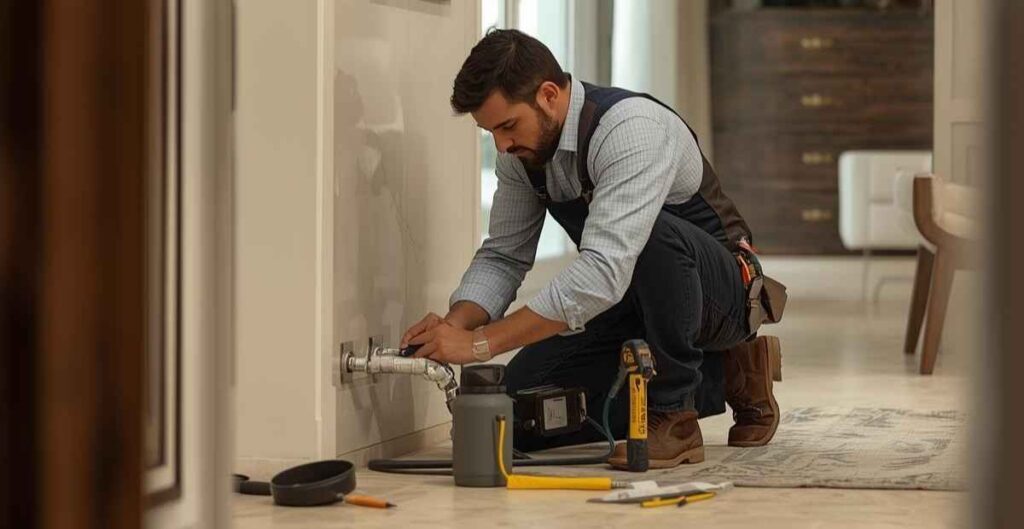
At Hi-Tech Plumbing Services Inc., we respond to burst pipe emergencies year-round, but December and January are our busiest months. We’ve seen it all: pipes bursting in attics of Winnetka homes, frozen garden hoses destroying interior walls in Canoga Park, and holiday trips to family leaving unheated homes vulnerable to freezing damage. The tragic part? Most of these emergencies are completely preventable with simple winterization preparation.
This guide walks you through how to identify vulnerable pipes in your Los Angeles home, provides a step-by-step winterization checklist you can complete this week, explains professional solutions for high-risk situations, and most importantly, shows you what to do if pipes actually freeze. By the time you finish reading, you’ll know exactly what to do to protect your home before the next cold snap hits.
Does LA Get Cold Enough for Frozen Pipes? (Yes, and Here’s Why)
Let’s address the myth head-on: “I live in Los Angeles—my pipes won’t freeze.” This misconception causes more winter plumbing emergencies than any other factor. Here’s the reality:
Downtown LA Climate: Coastal areas and downtown LA rarely experience freezing temperatures. Lows typically stay between 40-50°F even in winter. Urban heat island effect (all the concrete, asphalt, and buildings) keeps temperatures relatively warm.
San Fernando Valley Climate: Inland valleys are dramatically different. Winnetka, Canoga Park, Sherman Oaks, Van Nuys, and other valley communities experience true winter weather. Temperatures regularly drop to 25-35°F during cold snaps, especially during December and January.
Why Elevation and Geography Matter: The San Fernando Valley sits 600-800 feet above sea level and is surrounded by mountains that block marine air flow. This geographical isolation creates cold microclimates where temperatures can be 10-15°F colder than coastal LA. When it’s 50°F in Santa Monica, it might be 30°F in Winnetka.
Recent Winter Patterns (2023-2025): Los Angeles has experienced colder winters than historical averages. The 2024-2025 season brought multiple freeze events with temperatures dipping below 32°F for extended periods—precisely the conditions that freeze unprotected pipes.
The Critical Temperature: Water freezes at 32°F (0°C). Pipes don’t instantly freeze at this temperature—it typically takes 4-6 hours of continuous freezing conditions for water in an exposed pipe to solid freeze. However, uninsulated pipes in attics or exterior walls can freeze much faster, sometimes within 1-2 hours during severe cold.
Which Pipe Locations Are Most Vulnerable in Los Angeles Homes
Not all pipes are equally vulnerable. Understanding your home’s specific risk points allows you to prioritize winterization:
Attics and Crawlspaces
This is where most burst pipes occur in Los Angeles homes. Attic pipes are exposed to outdoor temperatures without insulation. Many older homes (built 1950s-1980s in Winnetka, Canoga Park, and surrounding areas) were constructed with minimal attic insulation and unprotected water lines running overhead.
Why attics are dangerous:
- No heat source (unlike heated interior spaces)
- Direct exposure to cold air
- Often forgotten until problem occurs
- Burst pipe in attic causes ceiling damage (expensive repair)
Exterior Walls and Perimeter Pipes
Pipes running along north-facing exterior walls or near windows lose heat rapidly. These locations receive minimal interior heat and maximum cold air exposure.
Common exterior wall vulnerabilities:
- Bathroom walls (especially older homes)
- Kitchen walls near sinks
- Utility closets with exterior access
- Pipes running through uninsulated cavities
Garages and Basements
Garages are heated minimally (if at all) and often have plumbing for water heaters, washers, or outdoor faucets. Basements (rare in LA but present in older Winnetka homes) similarly lack adequate heating.
Outdoor Hose Bibs and Spigots
This is the #1 freezing vulnerability most homeowners ignore. Water trapped inside a hose bib (the external faucet connection) freezes easily because:
- Hose bibs are thin-walled
- They protrude into outdoor temperature
- Water gets trapped inside when hose is left connected
- Trapped water has nowhere to escape as it expands during freezing
A single burst hose bib can damage interior walls, drywall, and insulation—costing $2,000-4,000 to repair.
Pipe Materials and Age
Certain materials are more vulnerable:
- Copper pipes: Durable but conducts cold. Freezes if unprotected
- PVC pipes: More brittle when cold. Can crack rather than burst
- Galvanized steel: Can freeze and rupture
- PEX (plastic): More flexible when cold but still can freeze
Older homes with copper piping built before 1980 in areas like Winnetka are especially vulnerable because they often lack proper insulation in original construction.
Step-by-Step Winterization Checklist for San Fernando Valley
Don’t wait for the first freeze warning to act. Complete this checklist now (mid-December) to avoid holiday emergencies:
Week 1: Assessment (December 15-22)
Day 1: Locate All Exposed Pipes
- Get a flashlight and inspect your attic for water lines
- Note which pipes are exposed (not wrapped in insulation)
- Take photos to remember locations
- Check for existing damage (frost, leaks, corrosion)
Day 2: Inspect Exterior Areas
- Check garage for water heater, supply lines, or washing machine connections
- Look for pipes along exterior walls
- Examine basement or crawlspace (if you have one)
- Locate all outdoor hose bibs (count them—most homes have 2-4)
Day 3: Test and Locate Shut-Offs
- Locate main water shut-off valve (know exactly where it is)
- Test it to ensure it works (don’t force it if stuck)
- Know how to turn it off in emergency
- Locate shut-off valves for specific areas (exterior spigots, water heater)
Day 4: Evaluate Existing Insulation
- Check if any pipes are already insulated
- Note insulation condition (damaged, deteriorated, missing sections)
- Identify which pipes need new insulation
- Plan priority order (start with vulnerable attic and exterior pipes)
Week 2: Preparation and Supplies (December 22-28)
Gather Materials:
- Measure exposed pipe lengths (length × width, in feet)
- Purchase foam pipe insulation sleeves (1.5-inch thickness recommended for CA)
- Cost: $0.50-1.50 per linear foot
- Example: 200 feet = $100-300
- Get duct tape for sealing insulation joints
- Consider heat tape for highest-risk areas
- Cost: $2-5 per linear foot
- Only for severe risk (exterior walls, exposed attic pipes)
- Purchase valve covers for outdoor shut-offs (if needed)
- Cost: $5-15 each
Optional Professional Assessment:
- Contact Hi-Tech Plumbing for professional winterization evaluation
- We can identify vulnerabilities you might miss
- Professional installation ensures effectiveness
Week 3: Installation (December 28 – January 5)
Pre-Freeze Installation Timeline:
- Install foam insulation on attic pipes first (highest priority)
- Wrap pipes with 1.5-inch foam sleeves
- Secure with duct tape at joints
- Ensure no gaps (cold air can penetrate)
- Insulate exterior wall pipes
- Insulate garage or basement lines
- Don’t forget rarely-used pipes (often the ones that freeze first)
Outdoor Hose Bib Preparation (Critical):
- Turn off interior shut-off valves to exterior spigots (if present)
- Open exterior spigots to drain residual water
- Leave spigots open to prevent pressure buildup
- Disconnect all outdoor garden hoses
- Drain hoses completely and store indoors
- Never leave hoses connected during winter
Days Before Cold Snap Hits (When Freeze Warning Issued)
24 Hours Before Freeze:
- Leave kitchen and bathroom faucets cracking open (1/8 inch)
- Moving water freezes less easily than static water
- This prevents pressure buildup that bursts pipes
- Open cabinet doors under sinks to allow warm air circulation
- Don’t rely on cabinet doors closing
- Ensure interior thermostat is set to 55°F minimum (industry standard)
During Extended Freeze:
- Don’t lower thermostat, even to save money
- Keep faucets dripping throughout the house
- Open cabinet doors continuously
- Leave interior doors open to circulate warm air
- Don’t leave home if temperature forecast shows extended freeze
Insulation Methods: Foam Wrap vs. Heat Tape vs. Professional Solutions
You have several options for protecting pipes. The right choice depends on your situation:
Option 1: Foam Pipe Insulation (Best for Most LA Homes)
How it works: Pre-slit foam sleeves wrap around pipes, providing thermal barrier between cold air and water inside.
Pros:
- Easy DIY installation (no special tools)
- Cost-effective ($0.50-1.50/foot)
- Effective for moderate cold
- Reusable year-to-year
Cons:
- Requires measurement and planning
- Won’t protect in extreme cold alone
- Must seal all joints properly
- Takes time to install properly
Best for: Attic pipes, interior exposed pipes, garage lines
Installation:
- Measure pipe diameter (usually 1/2″ or 3/4″)
- Purchase pre-slit foam matching diameter
- Wrap around pipe
- Seal joints with duct tape
- Ensure no gaps where cold air can penetrate
Cost Example: 200 feet of pipe × $1/foot = $200-300 materials + 4-6 hours DIY labor
Option 2: Heat Cable (For High-Risk Situations)
How it works: Electric heat cable wraps around pipe. Thermostat activates heating when temperature drops below freezing point.
Pros:
- Active heating (prevents freezing in extreme cold)
- Automatic activation (temperature-sensitive)
- Professional installation available
- Highly effective for vulnerable locations
Cons:
- Requires electrical outlet (might not be available)
- Higher cost ($2-5/foot installed)
- Uses electricity (ongoing cost)
- Needs annual inspection
- Potential fire hazard if damaged
Best for: Outdoor hose bibs, exterior walls, high-exposure attic pipes
Installation:
- Requires licensed electrician for safety
- Must be certified by GFCI (ground fault circuit interrupter)
- Should have timer or thermostat control
- Insurance may have requirements
Cost Example: 50 feet heat cable × $4/foot installed = $200-300 + $10-15/month electricity during winter
Option 3: Professional Winterization Service
What we provide:
- Complete assessment of vulnerable pipes
- Professional-grade foam insulation installation
- Heat cable installation where necessary
- Preventive measures (drain valves, covers, seals)
- Spring de-winterization service
When to choose professional:
- Complex plumbing system
- Multiple high-risk areas
- Concerned about DIY installation quality
- Want insurance/warranty on work
- Prefer expert guidance
Cost: $300-800 depending on home size and complexity
Benefits:
- Ensures all vulnerabilities addressed
- Professional-quality installation
- Inspection of existing insulation
- Peace of mind
Outdoor Hose Bibs & Spigot Protection (Most Common Freeze Point)
Outdoor hose bibs are the single most common freeze point in Los Angeles homes. Here’s how to protect them:
Understanding the Problem
A hose bib is the external faucet where you connect garden hoses. When you leave a hose connected during winter:
- Water fills the hose and hose bib connection
- Temperature drops below 32°F
- Water inside the hose and connection freezes
- Ice expands (water is one of few substances that expand when frozen)
- Expansion pressure ruptures the hose bib or interior supply line
- Spring thaw reveals burst connection—water damages interior walls
Prevention Method 1: Disconnect and Drain Hoses
Critical steps:
- Disconnect ALL garden hoses before December 1
- Turn off interior shut-off valve for that spigot (if accessible)
- Open the spigot fully to drain remaining water
- Leave spigot open throughout winter (allows pressure relief)
- Don’t reconnect hoses until March
- Store hoses indoors during winter
Timeline: Should be done by December 1 (before first freeze risk)
Prevention Method 2: Install Frost-Proof Hose Bibs
These special faucets drain automatically when you close the handle, preventing water trap.
How frost-proof bibs work:
- Internal valve sits several inches inside wall
- Closing handle drains water from exposed portion
- No water remains to freeze
- Prevents burst damage
Cost: $30-80 per bib + $100-200 professional installation
Best for: New construction or significant renovation. Too late to install now, but plan for spring installation.
Prevention Method 3: Hose Bib Covers
Insulated covers provide basic protection:
How they work:
- Insulated foam covers slip over outdoor faucet
- Traps ambient heat around connection
- Reduces (not eliminates) freeze risk
- Easy to install
Effectiveness: Low to moderate (not recommended as sole protection)
Cost: $5-15 each
Note: Covers don’t address water trapped inside connected hoses—that’s why disconnecting hoses is critical.
Interior Thermostat Management During Cold Nights
This is one of the most overlooked winterization steps. Many people lower thermostats during freeze events to save money—this is a mistake that costs thousands:
Recommended Thermostat Settings
Minimum Interior Temperature: 55°F (15°C)
Industry standard is 55°F minimum to prevent pipe freezing in insulated interior walls and heated spaces.
Better: 60-65°F (16-18°C) provides safety margin without excessive energy use
Why Lower Temperatures Cause Problems
When thermostat is set to 50°F or lower:
- Interior walls don’t receive sufficient heat
- Pipes in exterior walls lose insulation value
- Pipes in attics (with insufficient insulation) approach freezing
- Any thermostat malfunction leaves home at risk
Never lower thermostat during freeze events—the savings ($2-5/night) don’t justify burst pipe repair costs ($5,000-15,000).
Smart Thermostat Strategy
If you have a smart or programmable thermostat:
Normal Winter Days (40-50°F outside):
- Set to 62°F during day
- Set to 58°F at night (safe minimum while comfortable)
Freeze Events (Below 32°F forecasted):
- Set to 65°F and leave alone
- Don’t lower overnight
- Don’t leave home if freeze lasts multiple days
- Risk is not worth savings
Holiday Travel Exception
If you’re leaving home during winter:
Option 1: Keep Home Heated
- Set thermostat to 55°F minimum
- Leave interior cabinet doors open
- Leave faucets dripping
- Ensure heat system is working properly
Option 2: Drain and Shut Off Water
- Turn off main water valve
- Drain all lines (flush toilets, open faucets)
- Leave drains open
- Only safe option if you’re confident system is fully drained
Option 3: Professional Home Sitting
- Have friend check home daily during freeze
- Verify heat is working
- Ensure no problems developing
Commercial Property Winterization for Business Owners
If you own commercial properties in Los Angeles (retail spaces, offices, rental apartments), winterization is your responsibility:
Why Commercial Properties Need Attention
Larger System Complexity:
- More pipes = more failure points
- Multiple bathrooms, break rooms, maintenance areas
- Sprinkler systems and outdoor connections
- Heating systems sometimes shut down during off-hours
Vacancy Risk:
- Empty commercial buildings often have heat turned off
- Holiday closure might mean week without heat
- Temperature drops rapidly in unheated commercial spaces
- Liability if burst pipe causes property damage
Tenant Complications:
- Building owners responsible for common area pipes
- Tenants may ignore warnings
- Liability issues if freeze damage occurs
Commercial Winterization Checklist
- Inspect all pipes in common areas (restrooms, hallways, mechanical rooms)
- Insulate all exposed pipes (not just residential—commercial standards apply)
- Test heat system before winter (ensure it works reliably)
- Drain and cap unused connections (old utility lines, removed fixtures)
- Protect sprinkler systems (drain or blow-out service)
- Consider professional 24/7 monitoring for multiple properties
- Coordinate with tenants on heating protocols
- Create emergency contact list for freeze events
Professional Winterization for Commercial: Hi-Tech Plumbing offers comprehensive commercial winterization including system assessment, insulation installation, and emergency monitoring.
Emergency Response: What to Do If Pipes Actually Freeze
Despite best efforts, sometimes freezes happen. Here’s what to do immediately if you suspect frozen pipes:
Recognizing Frozen Pipes
Warning Signs:
- Gradual water pressure reduction in certain fixtures
- No water from specific faucets while others work
- Visible frost on exposed pipes
- Cracking or popping sounds in walls/pipes
- Water backing up from drains (usually in cold areas)
Immediate Actions
Step 1: Identify the Problem
- Turn on affected faucet (verify no water flowing)
- Check if problem affects one fixture or multiple (determines scope)
- Look for visible frost on exposed pipes
- Note which areas are affected
Step 2: Prevent Bursting
- Turn off main water valve immediately
- Open all faucets in house to relieve pressure
- This is critical—don’t wait for professional help
Step 3: Apply Gentle Heat (IF YOU’RE CONFIDENT)
- Use hair dryer on low setting
- Aim at frozen section for 5-10 minutes
- Repeat every 30 minutes if needed
- Never use blowtorch or extreme heat
Step 4: Call Professional Immediately
DO NOT ATTEMPT:
- Using blowtorch or open flame (fire hazard)
- Hitting frozen pipe (causes burst)
- Forcing shut-off valve if stuck
- Ignoring problem (it won’t thaw on its own quickly)
Why Professional Thawing Is Necessary
Professional plumbers have:
- Specialized thawing equipment (heat blankets, infrared cameras, water circulation systems)
- Knowledge of which methods work for different pipe types
- Insurance and liability coverage
- Ability to identify if pipe actually burst (requires inspection)
Call Hi-Tech Plumbing’s 24/7 emergency line: (818) 941-6741
We respond to frozen pipe emergencies throughout Los Angeles, Winnetka, Canoga Park, Sherman Oaks, Burbank, Glendale, and all surrounding areas.
Emergency Response Time: 30-45 minutes in most service areas
No Extra Charges for Freeze Events (unlike some competitors who charge “emergency surcharges”)
Pre-Holiday Emergency Prevention Checklist
Use this final checklist 1-2 weeks before your holiday celebrations:
Drain System Check
- Run water slowly through all drains
- Verify quick drainage (no slow drains)
- Listen for gurgling when flushing
- Schedule drain cleaning if concerns (don’t do this during freeze)
Pipe Protection (Priority)
- Attic pipes wrapped with foam insulation
- Exterior wall pipes insulated
- Garage water lines protected
- All outdoor hoses disconnected and drained
- Outdoor shut-offs drained (spigots left open)
Thermostat and Heat
- Verify furnace/heat system working properly
- Set minimum thermostat to 55°F
- Know how to adjust thermostat if needed
- Have backup heat source if main system fails
Valve Locations
- Know main water shut-off valve location
- Know how to turn it off (show family members)
- Know shut-off valves for specific areas
- Verify valves aren’t stuck or corroded
Emergency Preparedness
- Post Hi-Tech Plumbing emergency number on refrigerator
- (818) 941-6741
- Know location of flashlight and tools
- Have plunger in every bathroom
- Understand what to do if pipes freeze (see above)
Don’t Let Winter Damage Ruin Your Holiday
The holiday season should be about family, celebration, and joy—not about standing in a flooded basement on Christmas Eve or dealing with burst pipes when you should be hosting relatives. Winter pipe damage is 100% preventable with preparation that takes just a few hours this week.
If you live anywhere in Los Angeles County—from Winnetka to Canoga Park, Sherman Oaks to Burbank, Glendale to Santa Monica—now is the time to prepare. Don’t wait for freeze warnings to act. The best prevention happens before cold weather arrives.
Contact Hi-Tech Plumbing Services Inc. for professional winterization consultation. Our team can:
- Assess your home’s specific vulnerabilities
- Install professional-grade foam insulation
- Set up heat cable protection for high-risk areas
- Ensure all outdoor connections are properly prepared
- Provide peace of mind before the holidays
Call (818) 941-6741 to schedule your winterization assessment. Or visit our contact page to book online.
Most winterization assessments take 30-45 minutes and cost $75-150. Compare that to $5,000-15,000 in burst pipe damage, and the investment is obvious.
Don’t let this year’s holidays include an emergency plumber. Get winterized today, enjoy your family gathering worry-free, and sleep soundly knowing your pipes are protected through the coldest nights Los Angeles has to offer. Your future self—and your wallet—will thank you.